Parasailing over Grace Bay in Turks & Caicos is one of the most unforgettable ways to see Grace Bay from above, especially if you’re trying it for the very first time. If you’ve seen the colourful chutes above the water and wondered what it’s really like, this guide walks you through everything from safety and take‑off to what you should wear and how to book. When you’re ready to fly, Captain Marvin’s Watersports has been parasailing over Grace Bay since 1991.
Why Parasailing in Turks & Caicos Is Perfect for First‑Timers
Turks & Caicos combines calm, clear water with long stretches of beach and wide‑open sky. Grace Bay, in particular, gives you panoramic views of turquoise sea, reef lines, and resort fronts without heavy boat traffic. For first‑timers, that means smoother flights, fewer waves, and more time to focus on the views rather than the conditions.
Because the islands are known for steady trade winds and warm temperatures year‑round, parasailing is available in most seasons, with timing adjusted around daily weather checks.
For first‑time visitors, parasailing in Turks & Caicos offers calm water, reliable winds and huge views over Grace Bay.
How a Typical Captain Marvin’s Parasail Works
A standard trip starts at the dock, where you check in with the crew and go over basic safety information. After boarding the boat, the captain introduces the team and explains how take‑off and landing will work. You’ll be fitted with a harness and life jacket, then clipped securely to the parasail bar.
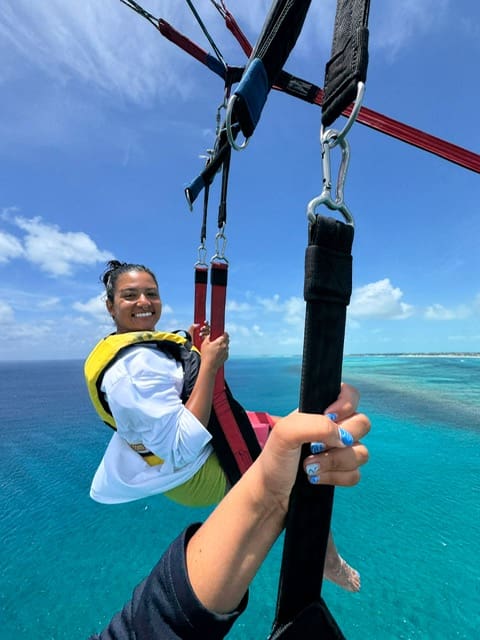
As the boat moves forward, the chute gently lifts you into the air. There’s no jumping or running required; you simply sit back and let the chute carry you upward. Once you reach full height, the boat maintains a steady speed so you float quietly above Grace Bay, usually for 10–15 minutes depending on the package. At the end of the flight, the crew reels you back in until you land softly on the back deck.
Safety Standards and Who Can Fly
Safety is the main concern for most first‑time parasailers. The boats used for parasailing are purpose‑built, with take‑off and landing platforms at the rear and equipment inspected daily. Crews run through checks on harnesses, clips, and lines before every flight, and they watch conditions closely, postponing or rescheduling if winds or seas become too rough. Read more about how Captain Marvin’s keeps every flight safe.
Most healthy adults and older children can safely parasail, but there are weight limits and some medical conditions where it’s best to talk to your doctor first. If you’re nervous, you can fly in tandem with a friend or family member so you’re not alone in the air.
If you’d like to talk through any safety questions before you book, call our team on +1 649-231-0643 and we’ll walk you through what to expect.
When you book parasailing in Turks & Caicos with Captain Marvin’s Watersports, every flight is run by an experienced crew and purpose‑built boat.
What to Wear and Bring
For clothing, light, comfortable beachwear works best: swimwear, quick‑dry shorts, and a T‑shirt are common choices. Footwear is usually removed on the boat, so simple sandals you can slip off are ideal. Because you’ll be exposed to sun and wind, bring sunscreen, sunglasses with a strap, and perhaps a hat that won’t blow away.
Many guests want to capture photos and videos while they’re in the air. The safest option is to bring a phone or camera in a secure waterproof case with a lanyard; ask the crew about recommended setups and whether they offer a photo package taken from the boat.
Best Time of Day for Parasailing in Turks & Caicos
Morning flights tend to offer the smoothest conditions and fewer other boats, which is great if you’re anxious or travelling with kids. Midday rides provide the brightest colours and highest contrast in photos, though the sun can feel stronger. Late‑afternoon parasailing gives more dramatic shadows and warm hues as the light softens.
Think about your priorities: comfort vs photos vs schedule. If you’re staying at a nearby resort or arriving on a cruise ship, your captain can recommend time slots that match your arrival and give you the experience you’re after.
Morning parasailing in Turks & Caicos is ideal if you want smoother conditions and fewer boats on the water.
Common Questions from First‑Timers
- Will I get wet?
You can usually choose. Some guests stay completely dry; others ask for a gentle “toe dip” at the end of the flight. - What if I’m scared of heights?
Many nervous guests say the view feels less intimidating than they expected because they’re securely strapped in and rising gradually. If you’re unsure, explain that to the crew and start with a lower flight height. - Can children parasail?
Age and weight limits apply, but plenty of families parasail together. It’s best to confirm age and weight for each child at the time of booking. - What happens if the weather changes?
The crew monitors conditions before and during every trip. If winds or seas change unexpectedly, they can shorten flights or reschedule to keep guests safe.
How to Book Your Flight
Once you’ve decided how many people are flying and whether you prefer a shared or private ride, you can reserve your spot in just a couple of minutes. Compare shared rides, early bird flights and private charters on our pricing page, or see every option on Our Tours.
- Call or WhatsApp: +1 649-231-0643
- Book online: Click here to book online
If you’re visiting during busy periods, reserve at least a day in advance; if you’re already on island, ask about same‑day openings. When you confirm your booking, note the dock location, check‑in time and any specific requirements so your day runs smoothly.