Wondering what to wear parasailing in Turks and Caicos? The right outfit can make your parasailing experience more comfortable, safe, and enjoyable from takeoff to landing.
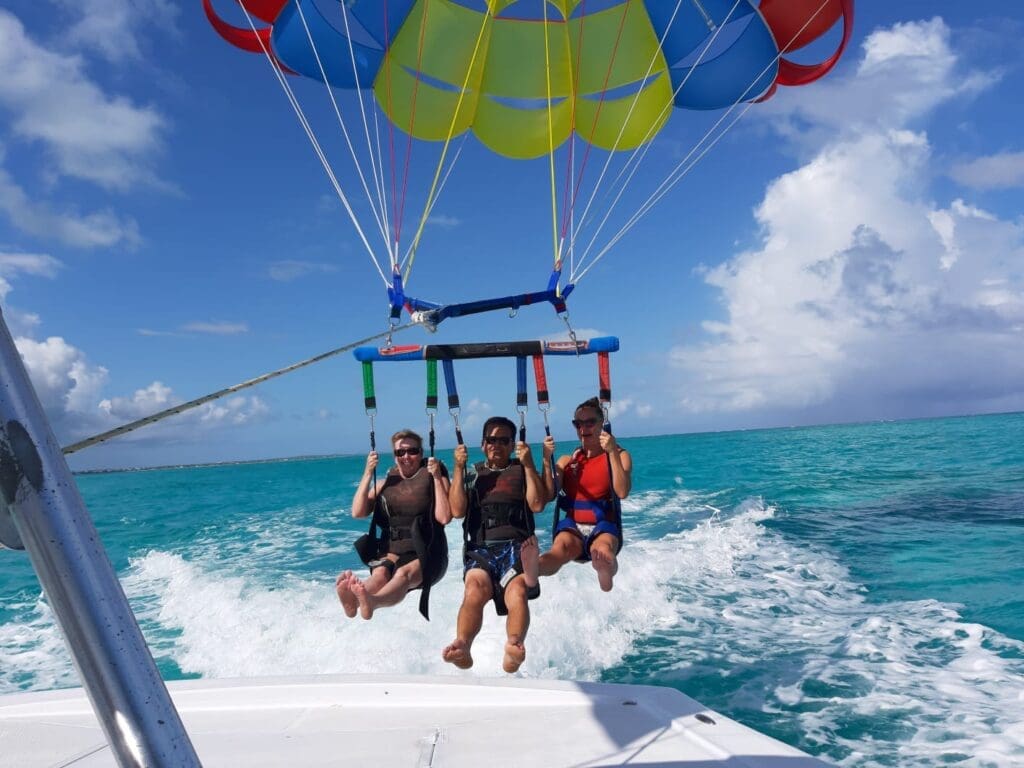
Parasailing is one of those vacation activities made for big smiles and “can you believe we just did that” moments. You’re lifted gently into the air behind the boat, secure in a harness, with a colourful canopy above you and the clear turquoise water of Grace Bay below. It’s surprisingly calm up there. You float, you take in the coastline, and for a few peaceful minutes everyday life feels very far away. From high above the crystal-clear Caribbean waters of Grace Bay in Providenciales, you’ll experience some of the most breathtaking ocean views in the Turks and Caicos Islands.
Quick Parasailing Packing Checklist
- Wear: your swimsuit, with a light cover-up, shorts or a T-shirt over it
- Shoes: sandals, flip-flops or water shoes you can slip off easily (plenty of guests fly barefoot)
- Sunglasses: with a strap, plus a snug hat you can stow before you fly
- Bring: reef-safe sunscreen, a towel, water, photo ID and a waterproof phone pouch with a lanyard
- Leave at the hotel: loose jewelry, expensive watches, large handbags and anything you can’t afford to lose
How long will you be out? About 1.5 hours round trip from Turtle Cove Marina, with 12 to 15 minutes in the air. See how long a parasail trip takes and our current pricing.
If parasailing is on your radar for this trip, you’re in the right place. Whether you’re the excited planner of the group, a nervous first-timer, travelling with kids, or celebrating something special, knowing what to wear and what to bring makes all the difference. The right outfit and a well-packed bag keep you comfortable and safe so you can focus on the view, not on a strap digging into your shoulder or a sunburn sneaking up on you.
Think of this as your pre-flight checklist. We’ll cover how to put together a simple parasailing outfit, what belongs in your bag, tips for first-timers and nervous flyers, advice for families and groups, and a few things worth knowing specifically about parasailing in Turks and Caicos. By the end, you’ll know exactly what to wear, what to pack, and what to expect.
What to Wear Parasailing
Your parasailing outfit needs to do three things at once: Because parasailing in Turks and Caicos happens under strong Caribbean sunshine and warm ocean breezes year-round, lightweight and breathable clothing works best. Stay comfortable while you’re sitting in the harness, handle a little sea spray, and protect you from the sun. The good news is you don’t need anything special, you can build a great outfit from what you’ve probably already packed for the beach.
Start With a Swimsuit That Stays Put
Wear your swimsuit as your base layer, even if you’re not planning to get wet. While Captain Marvin’s hydraulic winch system launches and lands you right on the deck of the boat, so your feet may never touch the water, there’s always a little ocean spray on a boat day. Starting in a swimsuit means you’re comfortable and ready either way.
Choose something secure that won’t shift when you sit, stand, or clip into the harness. A one-piece or a well-fitting two-piece with proper straps works well; skip loose ties that could come undone. If you’d like more coverage, add swim shorts or a lightweight cover-up over the top.
Add Lightweight, Quick-Dry Layers
Over your swimsuit, choose lightweight, quick-drying clothing. A breathable t-shirt or a rash guard is ideal, a rash guard is our quiet favourite, since it protects your shoulders during the boat ride, dries fast, and won’t flap in the wind the way a loose shirt can. On breezier days, a thin zip-front sun layer beats anything heavy or bulky.
Sun Protection You’ll Be Glad You Wore
You’ll feel the sun more than the wind once you’re up in the air, so build protection into your outfit:
- A snug hat or cap that won’t blow off easily (you’ll stow it before you fly).
- Sunglasses with a strap, polarised if you have them. A retainer strap is the difference between keeping them and watching them drop into Grace Bay.
- A rash guard or long-sleeve sun top, especially for kids, fair skin, or anyone who burns quickly.
Footwear That Works on the Boat
The deck can get wet, so go with secure footwear you can slip off easily before you fly. Easy-on sandals, flip-flops, or water shoes all work well. Avoid heavy sneakers or anything with long laces. Plenty of guests simply fly barefoot, which is completely fine.
Dressing for a Special Occasion
One of the fun quirks of parasailing is that you really can fly in whatever you like. Because you launch dry from the deck, guests have gone up in sundresses, in matching outfits for anniversaries, even proposal-ready. If you’ve got a special flight planned and want to look the part for photos, you can, just make sure everything is secured and won’t be a problem in the wind.
What to Bring Parasailing: Your Grab-and-Go Checklist
Once your outfit is sorted, pack a small beach bag the night before with the following:
- Reef-safe sunscreen. Apply before you arrive, then bring it for touch-ups. Reef-safe (mineral-based) formulas are genuinely appreciated in these waters, which are full of living coral and marine life.
- A towel. A lightweight, quick-dry travel towel won’t take over your bag.
- A water bottle. Hydration matters in the Caribbean sun, sip before and after your flight.
- ID and booking confirmation. Keep a photo ID and your booking details together in a small pouch.
- A waterproof phone pouch with a lanyard, if you’re bringing your phone on the boat.
- Sunglasses with a strap and SPF lip balm. Wind, salt, and sun can be rough.
- A hair tie for longer hair.
- A camera or GoPro with a secure wrist or chest mount for hands-free footage.
- A small dry bag to keep your towel, cover-up, and electronics splash-free.
- A change of clothes (optional, but nice if you decide to dip).
Comfort and Motion Relief
If anyone in your group is prone to seasickness, pack motion tablets or acupressure bands and use them before you board, not after. A small, bland snack like crackers can also help you feel settled.
What to Leave Behind
Just as important as what to bring is what to leave at the hotel. From altitude, anything loose is gone for good:
- Loose jewelry, dangly earrings, and bracelets
- Unsecured phones and sunglasses
- Expensive watches and large handbags
- Anything you’d be heartbroken to lose
When in doubt, leave it out. The crew will give you a place to stow your belongings on the boat while you fly.
Parasailing Tips for First-Timers and Nervous Flyers
If you feel that mix of excitement and nerves, you’re exactly like most first-timers. A little preparation turns the jitters into the good kind of butterflies, and at Captain Marvin’s, with 400,000+ safe parasailing flights since 1991, you’re in steady, experienced hands.
Know the Flow
You ride out on the boat, the crew helps you into your harness right on the deck, you sit (solo, or side by side with one or two others), and the winch gently lifts you into the air as the boat moves forward. Takeoff feels more like settling onto a swing than dropping on a roller coaster. As one of our guests put it, “if you can sit, you can fly.” No jumping, no leap of faith, no experience needed.
What It Feels Like Up There
The lift is smooth and gradual, you rise slowly as the line feeds out, not in a sudden rush. Once you reach height, it’s genuinely peaceful: less engine noise, more warm wind and open ocean. At the end, the same winch lowers you softly back to a seated position on the deck. The crew talks you through every step.
Settle the Nerves
- Breathe. Before you clip in, take slow steady breaths, in through the nose, out through the mouth, and keep that rhythm as you lift off.
- Fly with someone. If you’re nervous, ask to go up with a friend or family member. Tandem and triple flights are easy to arrange.
- Pick one thing to look at — the shoreline, a patch of reef, the horizon, and keep your eyes there until your body relaxes.
- Remember the timing. The flight is relatively short, so if a flutter of nerves hits, remind yourself you’re already doing it.
Talk to Your Crew
Tell the crew it’s your first time, a good team is always happy to walk you through it. They’ll explain simple hand signals for “I’m okay” and “bring me down,” so repeat those back once. And if a strap feels too tight or anything doesn’t feel right, say so straight away so they can adjust it. Speaking up is exactly what they want you to do.
If reading up beforehand helps calm your mind, our FAQs page answers the most common questions, and the blog has more on what to expect. The more familiar it feels on paper, the easier it feels on the boat.
Tips for Families, Groups, and Special Occasions
Parasailing is one of those rare activities that works for kids, grandparents, couples, and big friend groups all at once. With a little planning, it becomes a shared “remember when” story everyone enjoys.
Coordinating Outfits and Photos
If you’re celebrating something, keep it simple and coordinated rather than complicated. Pick one or two colours that look good against blue water, light neutrals or bright solids photograph beautifully, and ask everyone to wear swimsuits or sun shirts in that range. Matching rash guards in a single colour make group photos look pulled together and keep everyone protected. Go easy on busy patterns, which can look cluttered in group shots.
Packing for Several People Without the Chaos
- Use one shared beach bag for group items: sunscreen, motion remedies, a few first-aid basics.
- Give each person a labelled zip pouch for their small personal items, handed out before you board.
- Assign roles, one adult on IDs and booking details, another checking everyone has sun protection, water, and a hat before leaving the room.
- Pack a “just in case” kit, spare swimsuit for younger kids, an extra t-shirt, and a plastic bag for wet things on the way back.
Kids and Older Adults
The crew wants everyone to feel safe and relaxed, and a few details planned ahead help:
- Check age and weight guidelines in advance, review them before you book, and reach out if you’re unsure.
- Plan who flies with whom. Nervous kids or grandparents often feel better paired with a calm adult.
- Choose easy-on clothing for older adults, simple pieces with no fiddly closures.
- Mind sun and hydration, long-sleeve sun shirts, hats with straps, and a few sips of water before boarding go a long way.
Making It a Highlight of Your Celebration
Whether it’s a birthday, honeymoon, reunion, or graduation trip, tell the crew what you’re celebrating, they love acknowledging special occasions and can help arrange who flies together. Decide in advance who’ll stay on the boat first to capture takeoff photos, then swap. Little post-flight traditions, like a “just landed” photo on the dock, make the memory stick.
Tips Specific to Parasailing in Turks and Caicos
Parasailing in Turks and Caicos feels like flying over a painting, clear water, long stretches of beach, and wide-open views in every direction. A little local know-how helps you time it right and enjoy that calm, floating feeling without stress.
Plan Around the Wind, Not Just the Sun
The breeze is part of what makes parasailing here so comfortable, but conditions matter. Reputable operators adjust timing or reschedule if winds get too strong, at Captain Marvin’s, the crew never flies in unsafe conditions, and your trip is rescheduled or fully refunded if the weather doesn’t cooperate. When you book, ask which part of the day usually feels calmest during your travel dates. And remember it can feel cooler at flight height even on a hot day, so a light sun shirt is your friend.
Best Time of Day to Fly
Mornings over Grace Bay tend to bring the flattest, glassiest water and the clearest visibility, ideal for nervous first-timers and families. Late afternoons offer warmer water and that golden-hour glow that looks beautiful in photos. Whatever you choose, give yourself a buffer, don’t book a flight right before a dinner reservation or your departure, in case conditions shift the schedule. For a full breakdown, see our guide on the best time to go parasailing in Turks and Caicos.
Give Yourself Island Time
Book parasailing on a day when you can relax, not the tightest day of your trip. You’ll want time to enjoy the boat ride, take photos, and soak it all in afterward. For more on the flight itself, read what you need to know about parasailing on Grace Bay Beach, and if you’ve got questions about timing or conditions for your dates, get in touch, a quick message before your trip often answers everything in one go.
Why Parasailing in Turks and Caicos Is Unique
Parasailing in Turks and Caicos offers a completely different experience from many other destinations. The calm turquoise waters of Grace Bay, the visibility of the Caribbean Sea, and the stunning aerial views of Providenciales make it one of the best places in the world for parasailing.
Captain Marvin’s hydraulic launch and landing system also allows guests to take off and land directly from the boat deck, creating a smooth and family-friendly experience for both first-time flyers and experienced adventurers.
Ready for Your Favourite Vacation Memory
Parasailing is simple, but a little planning turns it from “let’s hope this works out” into “that was the best thing we did all trip.” Dress in comfortable swimwear that stays put, quick-dry layers, and built-in sun protection. Keep your bag small, sunscreen, towel, water, ID, a phone pouch, and a few comfort items. Leave the valuables behind, talk to your crew, and give yourself a little room in your schedule.
Do that, and your flight becomes exactly what it should be: a safe, exciting, and unforgettable highlight of your vacation. With 35+ years of experience, 400,000+ safe parasailing flights, and a USCG-certified crew, Captain Marvin’s has spent decades making sure every guest gets the very best version of it.
Book your parasail adventure today and come see the view for yourself.
FAQs
Secure sandals are usually fine, but many guests prefer going barefoot for comfort during takeoff and landing.
Most parasailing flights stay relatively dry, although light splashing can happen during takeoff or landing depending on sea conditions.
Bring sunscreen, sunglasses with a strap, water, and a waterproof pouch for your phone or valuables.
Yes. Parasailing is a calm and beginner-friendly activity when operated by experienced crews and modern equipment like Captain Marvin’s hydraulic launch system.
Parasailing is available year-round in Turks and Caicos thanks to the warm Caribbean climate and calm waters around Grace Bay and Providenciales.